Product details description
Geogrids and geotextiles are both geosynthetics used to reinforce soil and
manage subsurface conditions, but they differ fundamentally in structure and
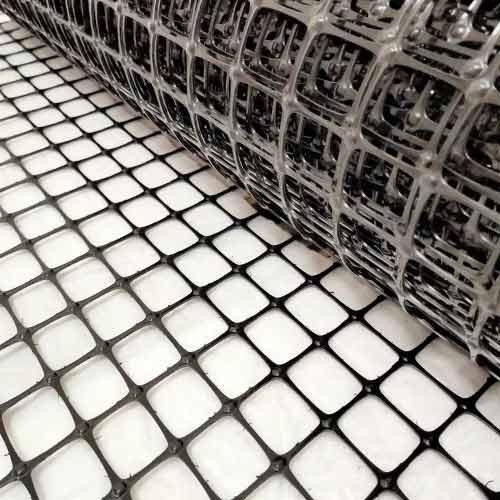
function. Geogrids are polymeric grids with large apertures, typically made from
polyethylene or polyester, designed to interlock with soil particles and provide
tensile reinforcement. They excel in applications such as road base
stabilization, retaining wall reinforcement, and steep slope stabilization,
where they confine granular fill and distribute loads laterally to reduce
deformation under traffic or gravitational forces.
Geotextiles, by contrast, are fabrics woven or non-woven, composed of fine
fibers that perform separation, filtration, drainage, and erosion control.
Non-woven geotextiles act like sponges, allowing water to pass while retaining
soil particles, making them ideal beneath aggregate in road construction and
under French drains. Woven geotextiles have high tensile strength along the warp
and weft directions and are used where soil separation and high puncture
resistance are needed, such as under riprap or ballast.
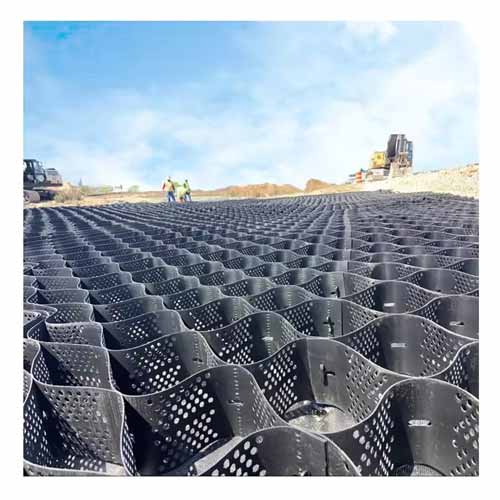
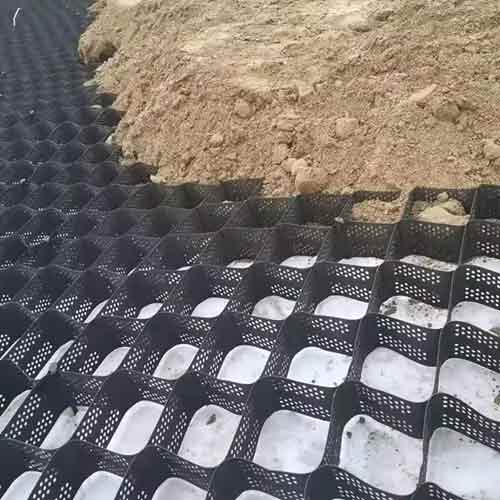
Load transfer mechanisms differ markedly. Geogrids reinforce by engaging
surrounding soil in a cellular confinement system, mobilizing tensile strength
to counteract vertical settlement and lateral spreading. Geotextiles primarily
function through filtration and separation, preventing intermixing of dissimilar
soils while allowing groundwater movement. In some cases, they are used
together: geogrids provide structural reinforcement, and geotextiles prevent
fine soil migration that could clog the grid openings or weaken the fill.
Selection criteria include soil type, expected loads, and hydraulic
conditions. Geogrids are preferred for high-load applications requiring tensile
resistance, while geotextiles are chosen for separation and filtration
challenges. Understanding these distinctions ensures optimal performance in
civil engineering projects, from highways to landfills, by deploying the right
geosynthetic for the task at hand.
geogrid for road geogrid machine geocell slope Composite geogrid
Previous article:
Geogrid for Slope Protection and Erosion Control Mats
Next article:
Innovative Designs in Geogrid Technology for Modern Infrastructure