Product details description
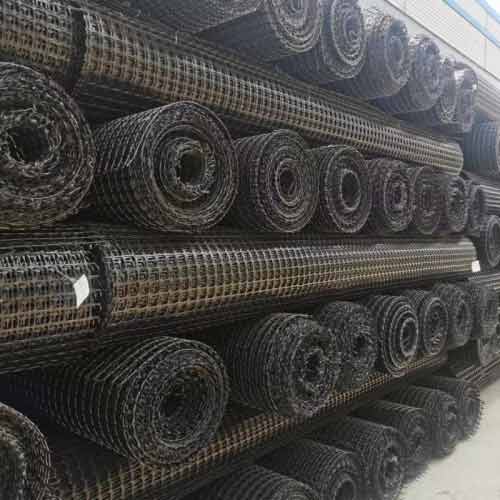
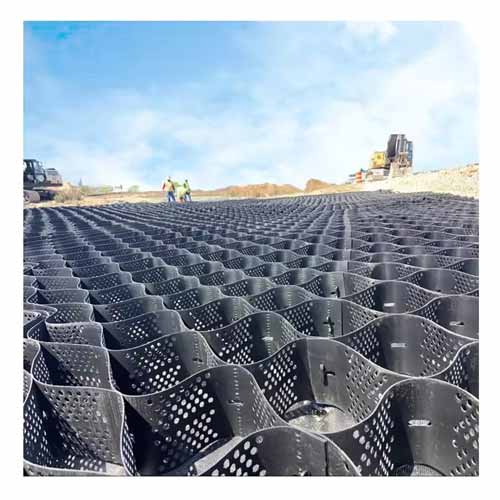
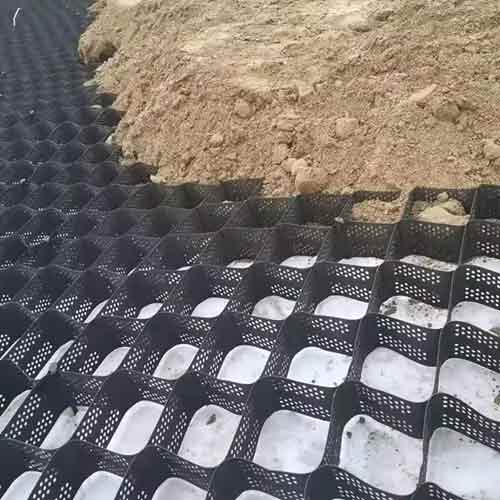
Geogrid systems for slope protection and erosion control provide essential
soil stabilization solutions for transportation projects, environmental
restoration, and civil engineering applications where vegetation establishment,
slope stability, and long-term erosion prevention are critical requirements.
These geogrids utilize high-tenacity polyester (PET) yarns or glass fiber
reinforcements conforming to ASTM D6637 specifications, with minimum tensile
strengths of 2,000 lbs/ft for standard applications and 4,000 lbs/ft for
high-strength requirements, providing superior soil confinement and load
distribution characteristics. The grid construction features apertures ranging
from 1 inch to 8 inches square, utilizing punched and drawn manufacturing
processes that create integral junctions with junction efficiency ratings
exceeding 90% compared to individual rib strength. Polyester yarns utilize
molecular weights exceeding 25,000 with less than 0.1% carboxyl end groups for
optimal durability and resistance to hydrolytic degradation, achieving creep
strain rates less than 2% at 20% ultimate tensile strength under 100-year design
life conditions. Installation systems include mechanical anchoring using steel
or fiberglass pins meeting ASTM D6706 specifications, chemical anchoring
utilizing polymeric grouts with 24-hour minimum cure times, and biological
anchoring through vegetation establishment using native seed mixes adapted to
local climate conditions. Surface treatments incorporate UV stabilization
additives achieving 90% tensile strength retention after 500 hours exposure per
ASTM D4355, while preventing degradation from biological organisms through
biocide treatments. The planar configuration provides isotropic strength
properties with uniformity in both machine and cross-machine directions,
enabling consistent performance regardless of installation orientation
requirements.
Advanced geogrid systems incorporate enhanced performance features
including multiaxial configurations providing tensile strength in multiple
directions for complex loading conditions, composite systems integrating
geotextile layers for filtration and separation functions, and biodegradable
options utilizing natural fiber materials providing temporary stabilization
during vegetation establishment phases. The soil interaction mechanisms include
passive resistance through soil-geogrid interlock creating confinement effects
with confinement factors exceeding 2.0, active resistance through friction
between soil particles and geogrid surfaces with interface friction angles of
25-35 degrees, and composite resistance through soil geogrid interaction effects
reducing stress concentrations in reinforced soil zones. Installation
considerations include proper subgrade preparation achieving minimum 95%
standard Proctor density, overlapping requirements of 12-18 inches at seams for
tension continuity, and proper tensioning during installation maintaining 5-10%
strain for optimal soil interaction. Performance testing includes ASTM D6637
tensile strength testing with elongation measurements, ASTM D4759 long-term
creep testing verifying design life performance, and ASTM D5321 direct shear
testing measuring soil-geogrid interface strength properties. Quality assurance
includes material certification per ASTM standards, junction strength testing
verifying integral connection performance, and field verification through
pullout testing ensuring adequate anchorage and soil interaction. The geogrid
applications provide measurable improvement in slope stability through enhanced
soil confinement, accelerated vegetation establishment through erosion control,
and long-term performance sustainability through durable material selection and
proper installation practices.
geogrid for road geogrid machine geocell slope Composite geogrid
Previous article:
Geogrid for Base Course Stabilization in Highways
Next article:
Geogrid vs. Geotextile: Understanding the Differences