Reliable Geogrid for Embankment & Slope Reinforcement
Release time:2026-03-03 Click:13
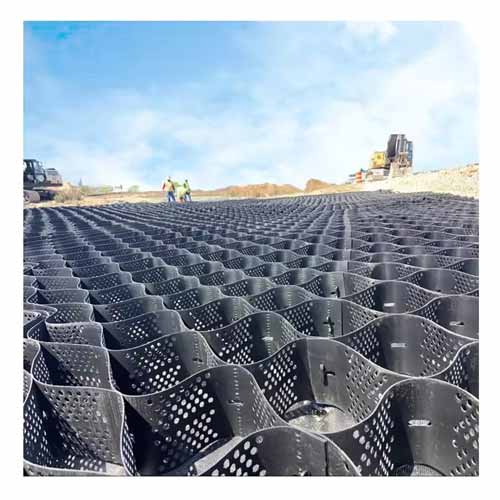
Geogrid technology has revolutionized earth reinforcement applications, providing reliable solutions for embankment construction and slope stabilization in challenging terrain conditions. These high-strength polymeric materials create three-dimensional reinforcement networks that distribute loads across soil masses, significantly improving bearing capacity and reducing settlement in soft ground conditions. Modern geogrids are manufactured using advanced extrusion techniques that align molecular structure in preferred directions, achieving tensile strengths exceeding 200 kN/m in machine direction. This oriented molecular structure allows geogrids to accommodate differential settlement while maintaining reinforcement effectiveness over extended periods.
The mechanism of geogrid reinforcement involves complex soil-structure interaction that enhances the mechanical properties of reinforced soil masses. When installed properly, geogrids create composite behavior where soil and reinforcement work together to resist external loads through interlocking mechanisms. The rib structures of geogrids provide mechanical interlock with surrounding soil particles, creating resistance to lateral deformation and improving overall slope stability. This interaction transforms loose, unconsolidated soils into stable, load-bearing structures capable of supporting highways, railroads, and heavy infrastructure with minimal maintenance requirements.
Embankment applications of geogrids span various infrastructure projects including highway construction, railroad bed stabilization, and dam reinforcement. In highway applications, geogrids reduce required fill volumes by allowing steeper side slopes while maintaining stability, resulting in significant cost savings through reduced material and right-of-way requirements. Railroad applications benefit from geogrid reinforcement that maintains track geometry under heavy axle loads, reducing maintenance frequency and improving ride quality. Dam and levee construction utilizes geogrids to improve stability against piping and slope failure, enhancing safety factors for critical water management infrastructure.
Quality control and installation procedures are critical factors determining long-term performance of geogrid reinforcement systems. Proper installation requires careful attention to overlap requirements, proper tensioning during placement, and protection from UV exposure during construction phases. Manufacturing quality control ensures consistent rib geometry, joint strength, and material properties throughout production runs. Field testing procedures verify installation quality through pull-out tests and settlement monitoring that confirm reinforcement effectiveness. When properly installed and protected, geogrid systems provide service lives exceeding 100 years with minimal maintenance requirements, making them cost-effective solutions for permanent infrastructure applications.
Previous article:Sustainable Stabilization with Erosion Control Mat
Next article:Reinforcing Soil Stability in Modern Highway Development: road construction geogrid
Hot products
Mobile: +86 15097722953
Email:metalproducts2021@163.com
Email:1755383270@qq.com