The Function of Drainage Net
Release time:2026-01-25 Click:30
In geotechnical engineering and landscape architecture, managing water beneath the surface is often more challenging than managing it on top. Drainage Net provides a three-dimensional solution for subsurface water management. Unlike traditional pipe drains or gravel layers, a drainage net is a synthetic, polymeric structure—often made of HDPE or PVC—that creates a continuous void space within the soil or aggregate. This void space acts as a capillary break and a conduit for gravity flow, efficiently collecting and channeling water away from foundations, retaining walls, and road sub-bases. It transforms chaotic underground water into a controlled flow, preventing hydrostatic pressure buildup that can crack concrete or destabilize slopes.
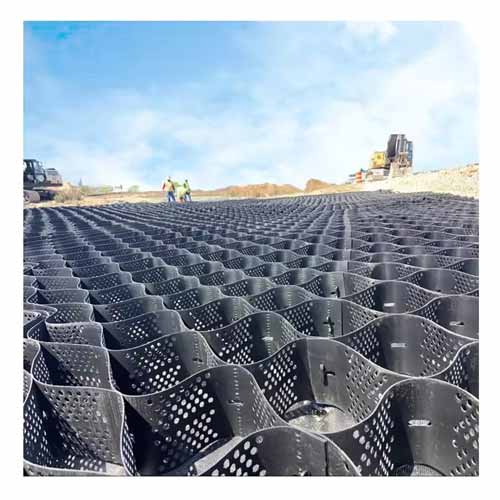
The construction of a Drainage Net typically involves a core structure of intersecting ribs or a mesh-like geonet. This core is often sandwiched between non-woven geotextile filter fabrics. The geotextile is crucial: it allows water to enter the net while preventing soil particles from clogging the flow channels. This "filter-drain" composite is rolled out like a carpet over the area to be protected. For vertical applications, such as behind a retaining wall, the net is stapled to the back of the structure before backfilling. The high transmissivity of the net ensures that even in heavy rainfall, the water pressure against the wall is minimized, reducing the load on the structural design and extending the wall's lifespan.
Applications for Drainage Net extend far beyond basic foundation waterproofing. In highway construction, it is used to drain the sub-grade, preventing frost heave in cold climates by keeping the soil moisture content low. In landfill engineering, drainage nets are placed beneath the waste to collect leachate—the toxic liquid runoff—and channel it to collection pipes, preventing the contamination of groundwater. Green roofs and rooftop gardens also rely heavily on drainage nets to protect the roof membrane from root penetration and waterlogging. These nets are lightweight, easy to install, and can hold significant amounts of water within their structure while still allowing excess water to drain away, creating a balanced moisture environment for plants.
Durability is a defining characteristic of modern Drainage Net. Because they are made from inert plastics like high-density polyethylene, they are resistant to biological degradation, rot, and chemical attack. Unlike clay pipes or organic matter, which can degrade over decades, a plastic drainage net can last the entire life of the building. They are also resistant to the high pressures encountered deep underground. The compressive strength of the ribs is engineered to withstand the weight of overlying soil and traffic loads without collapsing the flow channels. This long-term reliability makes them a cost-effective solution, as the reduction in maintenance and repair costs outweighs the initial material expense.
Installation of Drainage Net is significantly faster and cleaner than traditional methods. Laying a layer of gravel and perforated pipe requires heavy machinery and generates dust and noise. In contrast, a drainage net is rolled out by hand or with light equipment, requiring no aggregate. This makes it ideal for tight urban sites or retrofit projects where space is limited. The sheets can be heat-welded or mechanically joined to create a seamless, watertight barrier. For complex geometries, such as around sumps or corners, the net can be easily cut and shaped, ensuring complete coverage without the gaps often found in rigid pipe systems.
Ultimately, Drainage Net represents a shift toward synthetic, composite solutions in civil engineering. It combines the functions of drainage, filtration, and protection into a single, thin layer. As urban density increases and "sponge city" concepts gain traction to manage stormwater, the role of these nets becomes even more critical. They allow engineers to create permeable, stable ground under impermeable surfaces. Whether protecting a basement from floods, stabilizing a highway embankment, or enabling a garden on a concrete roof, the drainage net is a versatile, unseen hero that keeps the ground beneath our feet stable and dry.
Previous article:Enhancing Slope Stability with High-Strength Geogrid Reinforcement
Next article:Stabilizing the Earth's Surface with Erosion Control Mats
Hot products
Mobile: +86 15097722953
Email:metalproducts2021@163.com
Email:1755383270@qq.com