The Science Behind Drainage Net Systems
Release time:2026-01-17 Click:21
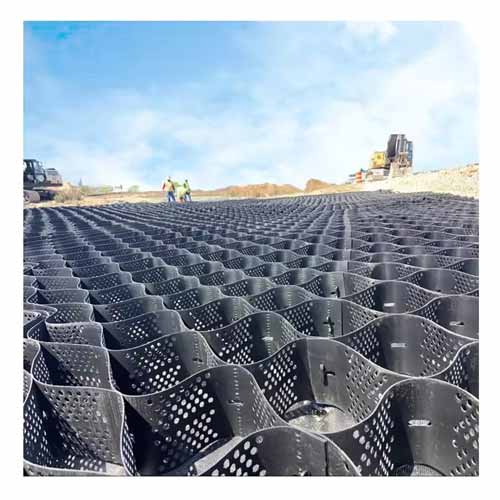
Beneath retaining walls, behind basement membranes, and under sports fields lies an unsung hero of civil engineering: the drainage net. This three-dimensional geosynthetic material—often made from high-density polyethylene (HDPE)—creates a continuous void space that channels water away from structures, preventing hydrostatic pressure buildup and soil saturation.
Unlike traditional gravel backfill, drainage nets are lightweight, easy to install, and consistent in performance. Their dimpled or ribbed profile forms a stable air gap between the structure and surrounding soil, allowing water to flow freely toward collection pipes or weep holes. This is especially critical in waterproofing systems for underground parking, tunnels, and foundation walls.
Modern drainage nets integrate multiple functions. Some combine a filter fabric layer to prevent fine soil particles from clogging the drainage channel—eliminating the need for separate geotextiles. Others feature self-adhesive edges for seamless overlap or UV-stabilized surfaces for temporary above-ground exposure during construction.
Sustainability drives innovation. Recycled-content HDPE is now common, and the reduction in gravel transport lowers carbon emissions. Because drainage nets occupy less space than gravel beds, they also enable slimmer foundation designs—maximizing usable interior volume in tight urban sites.
Performance is rigorously tested. Standards like ASTM D4439 measure compressive strength, flow rate, and long-term creep resistance. High-quality nets maintain their shape under soil loads exceeding 100 kPa, ensuring decades of reliable service without collapse or deformation.
Though hidden from view, the drainage net plays a pivotal role in structural longevity. It doesn’t stop water—it guides it wisely, silently protecting what we build from the relentless force of moisture.
Previous article:Durable Stretched Geogrid for Long Term Infrastructure Projects
Next article:High Tensile Strength Extruded Geogrid for Slope Protection
Hot products
Mobile: +86 15097722953
Email:metalproducts2021@163.com
Email:1755383270@qq.com