The importance of geosynthetics in railway construction
Release time:2025-09-25 Click:37
Geosynthetic products play a vital role in railway construction due to their numerous benefits and contributions to the performance and longevity of railway infrastructure. Here are some key reasons why they are important in railway construction:
Soil Stabilization: Geosynthetics, such as geogrids and geotextiles, are used to stabilize the soil beneath the railway tracks. They distribute loads more evenly, reduce differential settlement, and enhance the bearing capacity of the soil. This helps to prevent track deformations, settlement, and track misalignments over time.
Erosion Control: Geosynthetics are employed to control erosion in railway embankments, slopes, and drainage channels. They prevent soil erosion by reinforcing the soil matrix, improving surface stability, and enhancing water drainage. This reduces the risk of embankment failures, slope erosion, and washouts, which can undermine the stability of the railway infrastructure.
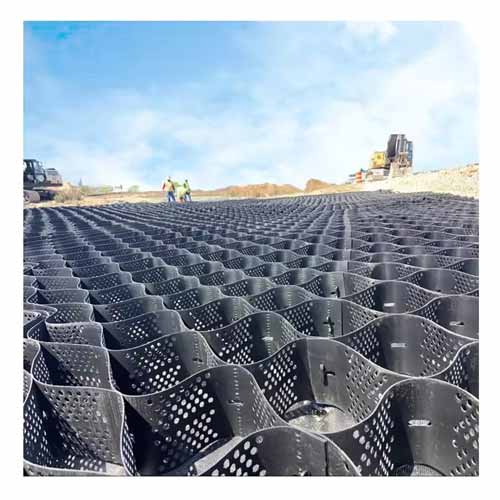
Track Ballast Reinforcement: Geosynthetics, such as geocells, are used to reinforce the track ballast. They confine and stabilize the ballast material, preventing lateral spreading and maintaining proper track geometry. This improves load distribution, reduces track settlement, and enhances the overall stability and performance of the track.
Subgrade Improvement: Geosynthetics can be employed to improve the subgrade conditions beneath railway tracks. They reinforcement layers, such as geogrids, are placed within the subgrade to enhance its strength and stability. This helps to distribute loads, reduce settlement, and increase the overall load-bearing capacity of the subgrade.
Drainage Enhancement: Geosynthetics with drainage capabilities, like geocomposites, are used to improve the drainage system within railway structures. They prevent water buildup, enhance water flow, and reduce pore pressures within the soil. Effective drainage helps to maintain the stability of embankments, slopes, and track subgrades, minimizing the risk of track failures and soil instability.
Cost and Time Efficiency: The use of geosynthetics in railway construction can often result in cost savings and reduced construction time. They provide alternative solutions to traditional methods, such as reducing the need for extensive earthwork, improving the use of local fill materials, and minimizing the required thickness of structural layers. Geosynthetics also offer long-term durability, reducing the need for frequent maintenance and repair.
Previous article:Concrete sealing using geosynthetics
Next article:What are geocells?
Hot products
Mobile: +86 15097722953
Email:metalproducts2021@163.com
Email:1755383270@qq.com