Product details description
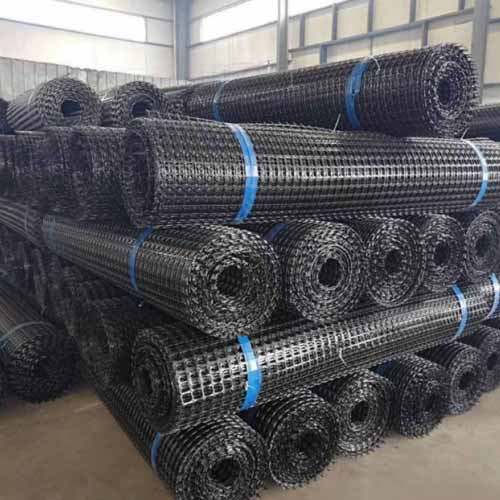
Geogrids, synthetic polymer reinforcements used to stabilize soils and
improve load-bearing capacity in civil engineering projects, present a complex
environmental profile that balances resource consumption, energy use, and
long-term ecological benefits. Manufactured primarily from polypropylene (PP) or
polyester (PET), geogrids rely on petrochemical feedstocks, raising concerns
about fossil fuel dependency and greenhouse gas emissions during production.
However, their contribution to sustainable infrastructure lies in reducing
excavation volumes, minimizing aggregate use, and extending pavement or
embankment lifespans—thereby lowering overall material demand and lifecycle
carbon footprints compared to conventional earthworks.
The environmental advantages of geogrids become evident in their
application. By reinforcing weak subgrades, they enable thinner pavement layers,
saving millions of tons of asphalt and concrete annually in highway and airport
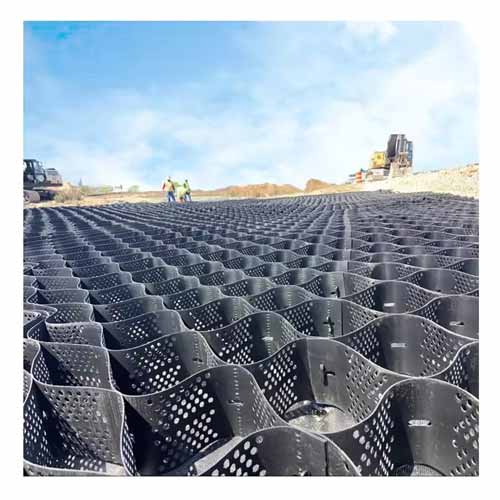
projects. In slope stabilization and retaining wall construction, geogrids
reduce the need for massive concrete or stone structures, preserving natural
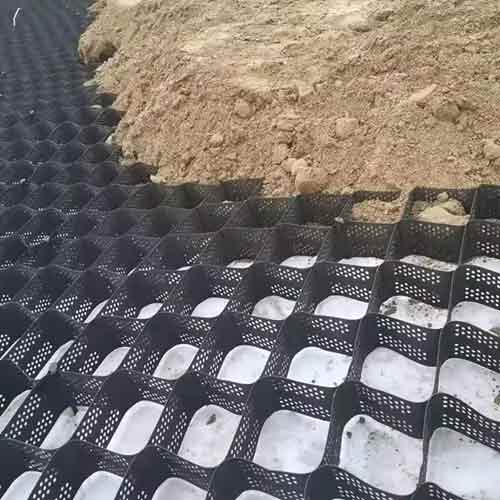
landscapes and reducing quarrying impacts. Their permeability allows for natural
drainage and root growth, supporting vegetation establishment in erosion-prone
areas—a critical factor in ecological restoration and green infrastructure
development.
End-of-life considerations are evolving rapidly. Historically viewed as
non-recyclable due to composite nature and soil contamination, newer generations
of geogrids are engineered with mono-material compositions and cleaner
manufacturing processes to facilitate mechanical recycling. Some manufacturers
now offer take-back programs where used geogrids are collected, cleaned, and
reprocessed into new geosynthetic products. Research into biodegradable geogrids
made from polylactic acid (PLA) or cellulose derivatives shows promise for
temporary applications like construction site access roads or agricultural
terracing, though durability remains a challenge for permanent
installations.
Future sustainability efforts focus on circularity, digital tracking, and
performance optimization. Blockchain-enabled traceability ensures responsible
sourcing of raw materials and verifies recycled content percentages. Life Cycle
Assessment (LCA) tools help engineers compare environmental impacts of different
geogrid types and select those with lowest embodied carbon. Integration with
smart sensors allows real-time monitoring of soil stability and deformation,
enabling predictive maintenance and reducing over-engineering. As climate
resilience becomes a global imperative, geogrids will play an increasingly vital
role—not just as soil stabilizers, but as enablers of low-carbon, nature-based
infrastructure solutions that harmonize engineering with ecology.
geogrid for road geogrid machine geocell slope Composite geogrid
Previous article:
Geogrid Long-term Performance: Durability and Maintenance Requirements
Next article:
Geogrid Tensile Strength and Load Distribution Properties