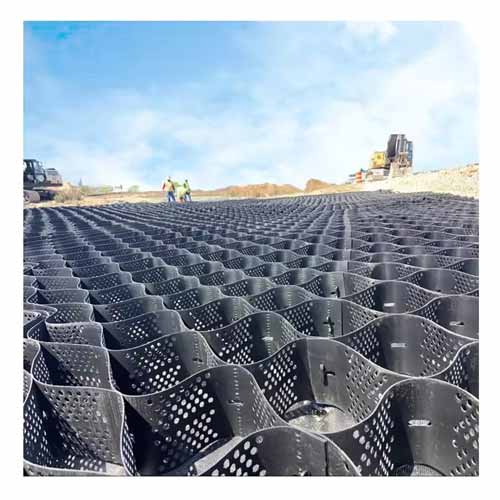
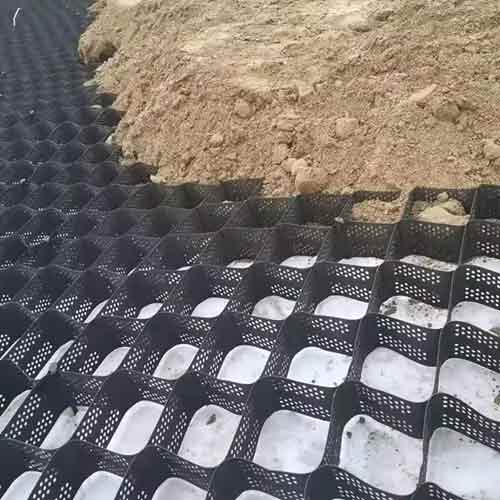
Product details description
Geogrid membranes are engineered geosynthetics that combine the tensile
strength of geogrids with the filtration and separation functions of
geomembranes, delivering critical permeability and drainage properties for civil
engineering and environmental applications. Their unique structure supports soil
stabilization, erosion control, and subsurface water management in roads,
embankments, landfills, and retaining walls.
Permeability in geogrid membranes arises from their porous structure, which
allows water to pass through while restricting the movement of fine soil
particles. This selective flow prevents clogging and maintains long-term
drainage performance. The apertures in the geogrid component create pathways for
water, while the membrane’s low permeability zones provide structural
reinforcement and separation between soil layers, ensuring that subgrades remain
stable under load.
Drainage functions are enhanced by the integration of drainage cores or
geocomposite layers within the membrane system. These features collect
infiltrated water and channel it laterally or vertically to discharge points,
reducing hydrostatic pressure behind retaining structures and preventing water
accumulation in pavement bases. In landfill applications, geogrid membranes
direct leachate to collection systems, protecting groundwater from
contamination.
Material composition determines performance characteristics. Geogrids are
typically made from high-density polyethylene (HDPE), polypropylene, or
polyester, providing high tensile modulus and resistance to chemical and
biological degradation. Membranes may be manufactured from similar polymers or
incorporate bentonite clay for enhanced impermeability where required. The
combination yields a product that is both mechanically robust and hydraulically
efficient.
Installation techniques maximize effectiveness. Membranes are laid over
prepared subgrades, with proper seaming (heat welding or adhesive bonding) to
prevent leakage. Anchoring and protection layers prevent damage during
backfilling and compaction. Quality control includes permeability testing, seam
integrity checks, and load verification. By leveraging geogrid membrane
properties, engineers achieve stable, long-lasting infrastructure with superior
water management capabilities, reducing environmental risks and maintenance
needs.
geogrid for road geogrid machine geocell slope Composite geogrid
Previous article:
Why Choose Our Basalt Geogrid?
Next article:
The Quick Construction Benefits of Using Geogrid