Soil Stabilization Reinvented: The Mechanics of Geogrid Triaxial
Release time:2026-02-28 Click:15
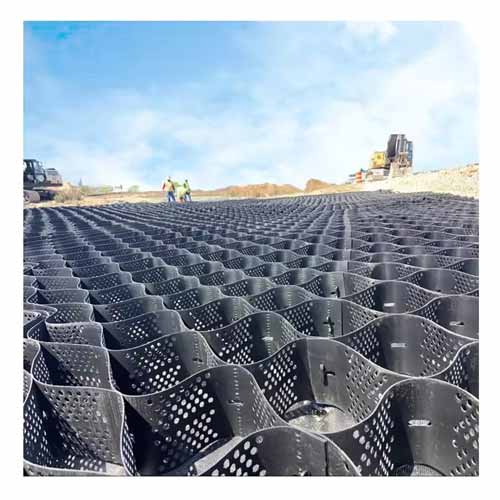
Geogrid triaxial is a revolutionary soil stabilization material, designed to reinforce weak soils and distribute loads in infrastructure projects. Unlike biaxial geogrids, its three-dimensional structure (grids in longitudinal, transverse, and diagonal directions) provides superior tensile strength and interlocking with soil particles. From road construction to landslide prevention, triaxial geogrids enhance soil stability, reducing settlement and extending project lifespans.
The structure of geogrid triaxial features a unique three-way grid. Made from high-density polyethylene (HDPE) or polyester, the grid has nodes at intersections, creating a rigid framework. The diagonal strands (at 45 degrees) connect longitudinal and transverse grids, forming triangular cells that interlock with soil. Aperture size (50–200 mm) determines soil particle size interaction—smaller apertures for fine soils, larger for gravel.
Mechanics of geogrid triaxial involve load distribution and soil confinement. When a load is applied (e.g., vehicle on a road), the geogrid’s tensile strength (20–100 kN/m) resists stretching, transferring the load to a wider soil area. The triangular cells confine soil particles, increasing friction and preventing lateral movement. This reduces settlement by 30–50% compared to unreinforced soil.
Applications of geogrid triaxial are critical in civil engineering. Road construction uses it to stabilize soft subgrades, allowing thinner aggregate bases. Slope stabilization employs it to prevent landslides, with grids anchored to bedrock. Parking lots and airport runways use it to handle heavy traffic. Even in retaining walls, it reinforces backfill soil, reducing wall height requirements.
Advantages of geogrid triaxial over biaxial geogrids are clear. Its three-way structure provides 2–3x higher tensile strength in diagonal directions, better resisting uneven loads. Improved soil interlocking reduces aggregate usage by 20–30%, cutting costs. For steep slopes (>45 degrees), it outperforms biaxial grids in preventing erosion.
Installation and maintenance of geogrid triaxial ensure effectiveness. The soil is graded and compacted, then the geogrid is unrolled and overlapped (300–500 mm) to avoid seams. Anchors (pins, stakes) secure it to the soil, with a layer of aggregate (100–200 mm) placed on top. Maintenance includes monitoring for tears (rare) and ensuring vegetation doesn’t grow through the grid. With proper installation, geogrid triaxial lasts 50–100 years.
Previous article:High Performance Extruded Geogrid for Soil Reinforcement
Next article:Durable Mining Geogrid for Long-Term Mine Waste Disposal Area Stabilization
Hot products
Mobile: +86 15097722953
Email:metalproducts2021@163.com
Email:1755383270@qq.com