The Essential Role of Geogrids in Modern Construction
Release time:2026-02-15 Click:21
In the realm of civil engineering and construction, stability is paramount. Whether building a highway across soft soil or constructing a towering retaining wall, engineers face the constant challenge of preventing soil from shifting, settling, or sliding. One of the most effective solutions to these problems is a material known as the geogrid.
What is a Geogrid?
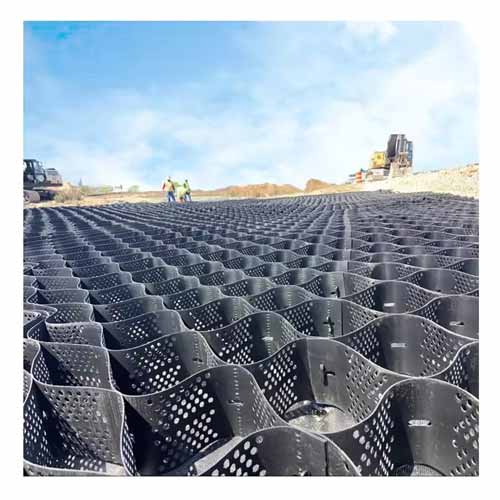
A geogrid is a geosynthetic material characterized by a grid-like structure. Unlike solid sheets or fabrics, geogrids consist of interconnected ribs with large open spaces between them, known as apertures. They are typically manufactured from polymers such as polyester, polyethylene, or polypropylene.
The primary function of a geogrid is reinforcement. Just as steel bars reinforce concrete, geogrids reinforce soil. Soil is naturally strong in compression but weak in tension. By placing a geogrid within the soil, the material absorbs the tensile forces, distributing the load over a wider area and significantly increasing the stability of the structure.
Types of Geogrids
Geogrids are categorized based on their manufacturing process and direction of strength:
Uniaxial Geogrids: These grids have strength primarily in one direction (usually the machine direction). They are ideal for applications where forces are exerted in a single direction, such as in retaining walls and steep slopes.
Biaxial Geogrids: These possess strength in both directions. They are commonly used for ground stabilization beneath roads, parking lots, and foundations where loads are applied from multiple directions.
Triaxial Geogrids: With a triangular structure, these grids offer a more uniform distribution of stress and are becoming increasingly popular for heavy-duty road construction.
Mechanisms of Action
The effectiveness of a geogrid relies on three main mechanisms:
Lateral Restraint: When aggregate or soil is compacted over the geogrid, the particles lock into the apertures. This interlocking effect prevents the soil from moving sideways, increasing the overall stiffness of the pavement.
Membrane Support: The geogrid acts as a membrane that spreads the load from heavy traffic above the soil to a wider area, reducing the pressure on the weak subgrade below.
Tensioned Membrane Effect: In some scenarios, the grid holds the soil together, preventing differential settlement and maintaining a smooth surface.
Applications and Benefits
Geogrids have revolutionized the way infrastructure is built. They are widely used in:
Roads and Pavements: By reinforcing the base layer, geogrids allow engineers to build roads over poor soil conditions without excavating and replacing the soil. This extends the lifespan of the road and reduces maintenance costs.
Retaining Walls: Geogrids are used to reinforce the backfill behind retaining walls, allowing for taller and steeper walls that are stable and resistant to overturning.
Slope Stabilization: They prevent landslides and soil erosion on steep embankments.
The benefits are substantial. Using geogrids often reduces the amount of aggregate required for a project, which lowers transportation costs and minimizes the environmental impact. Furthermore, they expedite construction times by creating a stable working platform immediately after installation.
Conclusion
The geogrid is a silent hero of modern infrastructure. Buried deep beneath roads or hidden within the soil of a retaining wall, it goes unseen by the public. However, its contribution to safety, cost-efficiency, and structural integrity is immense. As civil engineering continues to push the boundaries of what is possible in difficult terrains, the geogrid will remain an indispensable tool for reinforcing the earth.
Previous article:How to Install Railway Construction Geogrid Properly
Next article:Reinforce Slopes Sustainably with Geomat
Hot products
Mobile: +86 15097722953
Email:metalproducts2021@163.com
Email:1755383270@qq.com